← Blog · July 6, 2026
Lead Generation Email Templates: Proven Cold Outreach Structures for 2026
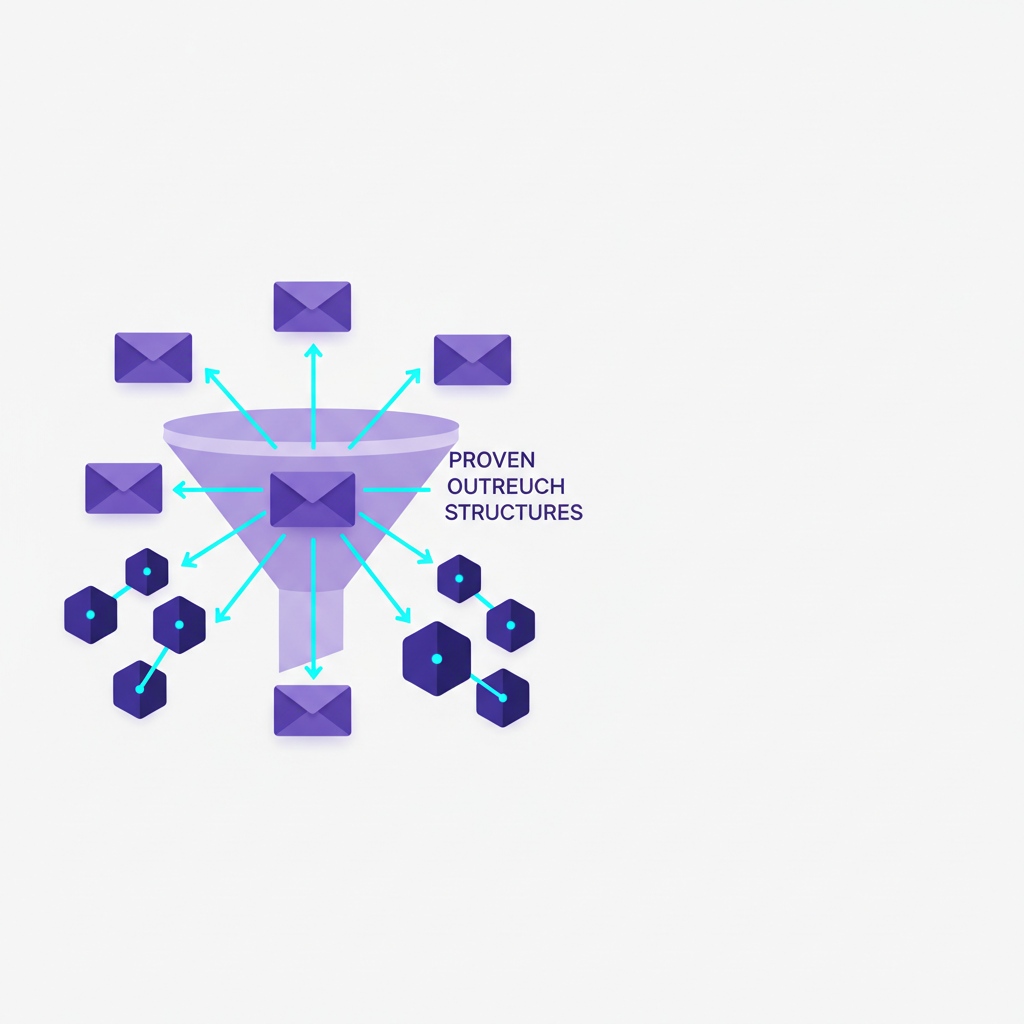
Most cold emails die a quiet death in a crowded inbox, or get archived with a quick swipe of a thumb. It’s rarely because the product is bad—it’s because the message reads like a boring, self-centered essay.
A sharp, well-structured cold email template doesn’t exist to close a deal on the spot. It exists to get a reply. Here is a library of 30+ field-tested outbound structures, real-world examples, and the technical setup you need to actually land in the inbox.
Key Takeaways
Cold email templates are repeatable frameworks designed to start qualified sales conversations, not to pitch your product or close deals on the first touch.
We’ve mapped out specific templates for every common play: net-new outbound, mutual connections, event follow-ups, reactivation, partnerships, and more.
Copy is only half the battle. Your infrastructure—warmup, inbox rotation, and domain health—dictates whether your emails get read. Platforms like NexusCold handle this safety layer so your team can focus on pipeline.
Inside, you'll find concrete examples, subject lines that earn clicks, and practical guides on follow-up timing and email length.
Scroll to the end for a direct, no-fluff FAQ section covering legality, performance benchmarks, and how to adapt these templates for different industries.
What Are Lead Generation Email Templates (and Why They Work)
A great cold email template is a blueprint, not a script. It encodes your positioning, value proposition, and response triggers into a flexible framework—subject line, hook, proof point, and call to action—that your team can personalize in seconds.
Using these frameworks saves your reps from starting every email with a blank page, freeing them to focus on research and relationship-building.
These are not generic marketing blasts. They are highly targeted, 1:1 messages built for B2B lead generation. While a closing email focuses on contracts and pricing, a lead generation email focuses on permission—earning the right to a 15-minute conversation.
To survive in 2026, templates must adapt to strict deliverability rules. That means short, plain-text messages with a natural tone, zero spam triggers, and an easy way to opt out.
Core Principles of High-Converting Lead Generation Emails
Before you write a single line of copy, keep these core principles in mind. They separate the campaigns that build pipeline from those that get your domains blacklisted.
One single ask. Every outbound email should drive a single action: a 15-minute chat, a simple yes/no reply, or a referral to the right stakeholder. Never ask for multiple things at once.
Role-specific pain. Your templates must speak directly to the recipient's daily challenges (e.g., pipeline gaps for a VP of Sales, messy data for RevOps, or burn rates for a Founder). Generic pitches get ignored; hyper-relevant pain points get replies.
Keep it incredibly brief. Aim for 60 to 130 words. Long emails feel like homework, and busy executives don't have time for them.
Sell the conversation, not the product. Hint at your value ("we helped SDRs cut reply handling time by 40%") instead of listing your product's entire feature set.
Protect your deliverability. Avoid spam-trigger words, limit links to the absolute minimum, and make sure your sender identity is authentic.
If your email reads like a marketing brochure, it will be treated like one: flagged, ignored, or sent straight to spam.
Cold Email Infrastructure: Set Up Before You Send a Single Template
The best copy in the world won't save you if your setup is broken. Before you launch any campaign, treat this infrastructure checklist as non-negotiable:
Authenticate your domains. Configure SPF, DKIM, and DMARC correctly. These protocols prove to receiving servers that you are who you say you are.
Use dedicated secondary domains. Never run high-volume cold outreach from your primary brand domain. One bad campaign can ruin deliverability for your entire company's daily emails.
Set up multiple mailboxes. Distribute your volume across 2-3 mailboxes per rep, and keep daily sends conservative (30-50 per mailbox) to stay under spam filters.
Warm up your accounts. Give new inboxes at least 2-4 weeks of automated, realistic email activity (replies, opens, folder moves) before you send cold outreach.
NexusCold automates this entire technical setup: mailbox provisioning, warmups, multi-inbox rotation, and deliverability monitoring. If you want a deep dive into setting this up correctly, check out this resource on outbound email automation strategy and tools.
The Ideal Cold Email Format for Lead Generation
Most high-performing cold emails follow a simple, reliable skeleton. Once you master this structure, you can adapt it to any angle.
The Essential Anatomy:
From line: A real human name, not an alias or info@ address.
Subject line: 3-7 words, lowercase, conversational, and completely free of clickbait.
Personalized hook: A quick sentence referencing their company, role, or a recent trigger event.
Value statement: What you do, tied directly to a metric they care about.
Proof point: A real, quantified result from a similar company.
Low-friction CTA: A single, low-pressure question.
Example (B2B SaaS, ~95 words):
Subject: outbound reply rates at {{company name}}
Hi {{first name}},
Noticed {{prospect's company}} recently launched a new SDR team. Scaling outbound is exciting until reply rates plateau around 2%.
We help B2B SaaS teams like {{similar company}} increase positive response rates by 3-5x through better sending infrastructure and sequence design. Their Head of Sales saw 6 extra qualified meetings per rep per month within 90 days.
Would a brief call next Tuesday or Wednesday make sense to compare notes?
Best, [Your Name]
Notice how the focus stays on the prospect's challenge, not your feature list. Even when automated, it sounds like a real note from one professional to another.

Foundational Lead Generation Email Templates by Intent
These foundational frameworks are your starting points. Customize them with your own metrics, case studies, and industry terminology. We use three classic copywriting frameworks: AIDA (Attention, Interest, Desire, Action), PAS (Problem, Agitate, Solve), and BAB (Before, After, Bridge).
Value-First Cold Email Template
This works best for cold accounts where asking for a meeting right away feels too aggressive. Instead, offer a quick, relevant benchmark or insight.
Subject: quick benchmark for {{company name}} SDR team
Hi {{first name}}, I pulled reply rate data across 40+ B2B SaaS teams running cold email campaigns this quarter. Companies in your segment are averaging 2.8% reply rates; top performers hit 7%+.
Happy to share the breakdown and what's driving the gap. Worth a quick call next week to compare notes?
Why it works: It establishes expertise and offers value upfront, making it a perfect opener for a multi-step sequence.
Problem-Agitate-Solve (PAS) Lead Gen Template
The PAS framework identifies a frustrating problem, highlights the consequences of ignoring it, and presents your solution as the logical fix.
Subject: cold emails landing in promotions?
Hi {{first name}}, if your cold email campaigns are hitting Promotions or spam, your SDRs are burning hours on outbound messages that never get read.
That's not just frustrating. It's lost pipeline and wasted headcount. We helped a similar company in B2B fintech cut spam placement by 80% and add 4 qualified meetings per rep per week.
Makes sense to explore if this applies at {{company name}}?
Keep the agitation realistic. Focus on actual business consequences (like wasted budget or missed targets) rather than cheap scare tactics.
Before-After-Bridge (BAB) Template
Paint a picture of their current world (the before), contrast it with a better, more efficient world (the after), and position your service as the bridge between the two.
Subject: from 2 meetings/week to 8
Hi {{first name}}, most founders I talk to are splitting time between product and sales, manually sending outbound messages and losing track of follow ups.
After switching to a structured outbound system, teams like yours typically see 3-5 extra qualified meetings per rep per week without adding headcount.
Open to a 12-minute walkthrough to see if this fits?
Make sure your "after" metrics are realistic. Outrageous promises (like "10x revenue in 10 days") will only land you in the trash folder.
Direct "Meeting Request" Cold Email Template
Use this when you have a highly qualified list, clear pain alignment, or leads from a recent webinar. It’s direct, clear, and respects a busy executive's time.
Subject: 5 more qualified demos per rep - worth a look?
Hi {{first name}}, we help B2B SaaS sales teams generate more leads from cold outreach by fixing infrastructure and sequence gaps.
{{similar company}} added 5 demos per rep per month after switching. Would a quick call Thursday at 2pm or Friday at 10am work to see if this fits {{company name}}?
While highly effective for SMB leaders, this direct approach can sometimes feel too forward for enterprise accounts.
Value-Only "Helpful Resource" Template
This template has no sales pitch. You are simply sharing a helpful tool, guide, or checklist to start a relationship on good terms.
Subject: cold email checklist your team might find useful
Hi {{first name}}, put together a short checklist on cold email format essentials that covers the formatting, length, and CTA mistakes we see most often.
If you'd like, I can share the template version we use with similar teams.
End with a soft, zero-pressure call to action.
Outbound Cold Email Templates for Net-New Prospects
Here is your library for first-touch outreach to decision-makers who don't know you yet. Each template is built to spark curiosity and earn a response.
Role-Based Relevance Cold Email Template
Speak directly to the recipient's job title by addressing the specific responsibilities and metrics they own.
Subject: pipeline coverage for {{Role}} at {{company name}}
Hi {{first name}}, as {{Role}}, you're likely tracking outbound reply rates and pipeline coverage heading into Q3. CPL across B2B SaaS rose ~18% in 2025, putting pressure on outbound to deliver.
We help teams like yours generate more leads from existing cold email campaigns without adding headcount. Worth exploring?
Tailoring your value statement to their exact title dramatically improves response rates. Ensure your CRM data matches their current LinkedIn title before sending.
Account-Context Cold Email Template
Use visible, public business changes (such as a hiring wave, product launch, or funding round) as the trigger for your outreach.
Subject: scaling outbound after Series B
Hi {{first name}}, saw {{prospect's company}} closed its Series B in January. Congrats. Teams at this stage typically need to scale outbound fast without wrecking deliverability.
Happy to share what we're seeing across similar Series B SaaS teams if that'd be useful.
Keep your trigger reference brief. You want to sound like a well-informed industry peer, not an automated tracker.
"Right Person?" Cold Email Template
A short, low-pressure template to find the proper decision-maker at larger companies where roles might overlap.
Subject: quick question
Hi {{first name}}, I typically work with Heads of Sales or VP Marketing on improving cold email reply rates and lead quality. Not sure if that's you at {{company name}} or someone else on the team.
If that's you, mind if I send 2 lines on why I'm reaching out? If not, happy to be pointed in the right direction.
Asking for a simple referral is a low-friction request that naturally gets higher reply rates.
Warm and Trigger-Based Lead Generation Email Templates
Warm leads require a different approach than cold outreach. Always open by referencing the specific event or action that prompted your email.
Event or Webinar Follow-Up Template
Follow up within 48 hours of an event or webinar while the experience is still top of mind.
Subject: follow up from Outbound Sales Summit 2026
Hi {{first name}}, enjoyed your question during the multi-inbox outreach session yesterday. The point about inbox rotation failing at scale resonated with a few teams I work with.
Would a 15-minute roadmap call be useful to dig into that for {{company name}}?
Keep the tone conversational and collaborative.
Recent Company News or Trigger Event Template
Tie your value proposition directly to their company's expansion or recent milestones.
Subject: congrats on the expansion
Hi {{first name}}, saw {{prospect's company}} recently launched operations in EMEA. Scaling outbound across new regions usually means spinning up more mailboxes and managing deliverability across geographies.
Would it be useful if I shared a quick playbook that worked for teams right after expansion?
Keep it relevant, direct, and helpful.
Reactivation Email Template for Past Leads
Reach back out to prospects who went cold after a demo, trial, or discovery call to see if their priorities have shifted.
Subject: a lot's changed since we last talked
Hi {{first name}}, we spoke back in Q2 2025 about improving cold email deliverability for your team. Since then, we've added [features/integrations] and helped similar teams cut bounce rates by 60%.
Worth revisiting for Q4 planning, or should I circle back early next year instead?
Give them an easy out so they don't feel pressured.
Leveraging Mutual Connections and Referrals in Your Templates
A warm referral is one of the most effective ways to get a meeting. Always make sure you actually have permission to mention your mutual connection before sending.
Referral from a Mutual Connection Template
Subject: {{mutual connection}} suggested I reach out
Hi {{first name}}, {{mutual connection}} mentioned you're scaling SDRs across EMEA this year. We helped their team double positive reply rates in 90 days.
Would a quick call next week make sense to compare notes? Happy to keep it to 15 minutes.
If your connection offers to introduce you, make it easy for them by drafting a short, forwardable email they can send on your behalf.
"Soft Referral" or Peer-Group Credibility Template
If you don’t have a direct introduction, you can build trust by referencing your work with recognizable competitors or peers in their space.
Subject: what's working for teams like {{Peer Company A}}
Hi {{first name}}, we've been helping B2B SaaS teams (50-250 employees) like {{Peer Company A}} and {{Peer Company B}} add 2-3 extra opps per rep per month from cold outreach.
Open to a short call to see if these patterns hold for your team?
Avoid generic social proof. Use actual client names and clear, believable outcomes.
Follow-Up Email Templates to Turn Silence into Replies
Persistence is key. The majority of your bookings will come from follow-up emails, not your initial touchpoint. Stopping after one try leaves pipeline on the table.
A typical outbound cadence: Day 2-3, Day 6-8, Day 12-15, and a final "breakup" email at 3-4 weeks.

First Follow-Up Email After No Response
Send this as a reply in the same email thread. Add a quick, helpful detail instead of just asking if they saw your last note.
Subject: Re: outbound reply rates at {{company name}}
Hi {{first name}}, wanted to share a quick stat: teams that fix inbox rotation before scaling outbound see 2-3x more replies per 1,000 sends.
If this isn't a priority this quarter, no worries. Happy to close the loop.
Value-Add Mid-Sequence Follow-Up Template
Offer another helpful resource, a short checklist, or a quick video to build your credibility.
Subject: Re: outbound reply rates at {{company name}}
Hi {{first name}}, put together a deliverability checklist our team uses before launching any cold email campaign. Figured it might be useful for {{company name}} regardless.
If this looks helpful, I can walk you through how we'd implement a version for your team.
This is a great option for your third or fourth touchpoint.
Final "Breakup" Follow-Up Template
Let the prospect know you're stopping your outreach. By taking away the pressure, you often prompt busy leads to finally reply.
Subject: should I close your file?
Hi {{first name}}, I've reached out a few times and don't want to be a nuisance. Totally understand if timing isn't right.
Happy to check back in Q1 2027 if that's better timing. Otherwise, I'll close the loop on my end.
This simple exit ramp is incredibly effective at reviving quiet opportunities.
Sequencing: Combining Templates into Lead-Generating Campaigns
A single email is not a strategy. You need a multi-touch sequence to build pipeline. Here is a proven 5-touch cadence for B2B SaaS:
| Touch | Day | Template | Goal |
|---|---|---|---|
| 1 | Day 0 | Value-First | Spark curiosity |
| 2 | Day 3 | PAS follow-up | Address the daily pain |
| 3 | Day 7 | Resource share | Offer standalone value |
| 4 | Day 12 | Direct meeting request | Convert interest to call |
| 5 | Day 21 | Breakup | Prompt a final response |
For the best engagement, schedule your emails to go out on Tuesday, Wednesday, and Thursday mornings. NexusCold handles these multi-step campaigns automatically, turning off the sequence the moment a prospect replies. For a deeper look at designing these touchpoints, read this best practices guide on outreach sequences.
Personalization Strategies That Scale Beyond First Name
Effective personalization is about relevance, not just merging names and company details. While personalized emails enjoy significantly higher response rates, you cannot spend half an hour researching every single lead. The key is structural, scalable customization.
Role-Based Personalization Examples
You can use the same core sequence structure but swap out specific hooks depending on who you are messaging:
For VP Sales: "You're likely managing pipeline coverage and team quota heading into Q3."
For RevOps: "Dealing with data gaps and managing 4 different point solutions is incredibly frustrating."
For Founders: "When you're split between building product and running sales, manual outreach eats up your actual runway."
This level of targeting fits perfectly into frameworks like AIDA or PAS without requiring you to write completely new sequences from scratch.
Account-Level and Trigger-Based Personalization Examples
You can also customize your templates using company-specific context.
"Saw {{prospect's company}} expanded its enterprise sales team in January. Usually, that stage requires a predictable stream of outbound opportunities to support the new headcount."
A single sentence of context is all you need to show you did your homework. Group your leads by trigger events (e.g., hiring, funding, expansion) and use modular copy snippets for each segment.
Industry-Specific vs Horizontal Lead Generation Templates
Industry-specific templates get better response rates but require more upkeep. Horizontal templates are easier to scale but can feel generic. We recommend focusing on your top 2 or 3 high-value industries (such as SaaS, professional services, or agencies) and tailoring your copy specifically for them first.
While a horizontal email might address broad issues like poor lead quality, an industry-specific version uses precise terminology, compliance realities, and metrics unique to their market.
Compliance, Deliverability, and Legal Considerations
No email template is worth using if it hurts your sender reputation or violates the law.
Keep these legal guidelines in mind:
CAN-SPAM (US): You must include your physical business address, use honest subject lines, clearly identify yourself, and offer an easy, fast way to opt out.
GDPR (EU): You must have a legitimate business interest to reach out, limit the data you store, and instantly honor any opt-out requests.
Best practices to protect your deliverability:
Avoid spam-trigger words, heavy HTML, or excessive links.
Never use deceptive email subjects (like fake "RE:" or "FWD:" lines).
Avoid including heavy images or tracking pixels in your initial outreach.
Rotate your templates regularly. If hundreds of companies are sending the exact same copy, spam filters will start blocking it.
NexusCold includes deliverability monitoring and safeguards to keep your sender score healthy as your campaigns grow. Keep a close eye on your bounce rates, blocklists, and spam complaints.
Measuring Lead Generation Email Template Performance
To truly understand how your templates are performing, look past open rates and focus on metrics that impact your pipeline:
| Metric | Average | Top Performers |
|---|---|---|
| Open rate | 26-32% | 40-50%+ |
| Reply rate (overall) | 1-3% | 5-12% |
| Positive response rate | 0.5-2% | 3-5% |
| Meetings booked rate | 0.3-0.6% | 1.5-3% |
| Bounce rate (target) | <2% | <1% |
Test one element at a time—like comparing two different subject lines or a PAS opener versus a value-first hook. NexusCold tracks these analytics at both the campaign and mailbox levels so you know exactly which templates to scale.
Adapting Templates for Different Stages of Company Growth
Your outbound copy needs to evolve as your company matures:
Early Stage: Focus on discovery and feedback. Keep your pitch brief, lead with curiosity, and ask for advice rather than a hard sales meeting.
Growth Stage: Focus on scaling what works. Highlight your case studies, use productivity tools, and build repeatable, multi-channel sequences.
Late Stage: Focus on enterprise displacement. Lead with clear ROI figures, risk-reduction guarantees, and detailed competitive comparisons.
Your copy must reflect current market dynamics. What worked two years ago will not work today.
Integrating Lead Generation Email Templates into a Larger Outbound System
Templates are just one component of an outbound engine that includes target lists, automation software, and a clean CRM database.
For a complete guide on building a modern sales stack, see this resource on outbound sales software. NexusCold coordinates the actual execution: sending your emails safely, managing inbox rotation, and routing all incoming replies into a single, unified workspace for your reps.
Always support your email sequences with LinkedIn touches or phone calls. A multi-channel approach is the best way to keep your response rates high.
Common Mistakes in Lead Generation Email Templates (and How to Fix Them)
| Mistake | Fix |
|---|---|
| Writing long, text-heavy essays | Cut your copy down to 60-130 words. Get straight to the point and focus on their problems, not your story. |
| Generic, vague value propositions | Use specific, quantified metrics that apply directly to their role. |
| Multiple, confusing calls to action | Ask one clear, low-friction question at the end of your email. |
| Giving up after one try | Build out a structured, 3-5 touch sequence. Most of your meetings will come from follow-ups. |
| Over-automating your personalization | Blend your merge fields with actual account research to keep your copy sounding natural. |
| Deceptive or clickbait subject lines | Use simple, clear, lowercase subject lines like "outbound reply rates at {{company name}}." |
| Self-centered, "me-first" introductions | Skip "We are the leading provider of..." and open with a specific observation about their business instead. |
Review your campaigns every quarter. If a template is underperforming, retire it or try a completely new angle rather than endlessly tweaking the subject line.
Putting It All Together: Building Your Lead Gen Template Library
Build a simple, highly organized internal asset library for your team:
3-5 net-new cold email openers (value-first, PAS, BAB, and direct).
3-4 follow-ups (value-adds, quick bumps, and breakup sequences).
2-3 event and trigger-based templates.
2-3 reactivation and referral frameworks.
Group these templates by intent rather than by campaign. Meet with your sales and marketing teams regularly to share what's working, sunset dead templates, and update your shared library.
Once your library is ready, upload your frameworks into a platform like NexusCold to safely automate your outreach, run clean A/B tests, and protect your domain reputation.

FAQ: Lead Generation Email Templates and Cold Outreach
How long should a lead generation cold email be in 2026?
Keep your first email between 60 and 130 words. Busy executives appreciate brevity. Your follow-up emails can be even shorter—often just a single sentence and a clear question. Save the detailed demo pitch until they've actually replied.
How many follow ups should I include in a lead generation email sequence?
A sequence of 3 to 5 total touchpoints (1 opener plus 2-4 follow-ups) is the sweet spot. It shows persistence without becoming annoying. If you don't get a response after 5 tries, step back and try again in a few months.
Can I reuse the same cold email templates across different industries?
You can reuse the structural frameworks (like PAS or BAB), but you must adapt the copy, metrics, and examples for each industry. Using an unrelated SaaS case study when emailing a healthcare executive will hurt your credibility.
What's the best way to test which lead generation email templates work?
Run clean A/B tests with one change at a time (like testing two different subject lines on a segment of 500 leads). Track positive response rates and booked meetings rather than just open rates.
How do I keep my cold emails legal and out of spam folders?
Comply with CAN-SPAM and GDPR by providing an easy opt-out, identifying yourself clearly, and using honest subject lines. Technically, make sure your SPF, DKIM, and DMARC records are set up correctly, use secondary domains, and run your campaigns through a deliverability-first platform like NexusCold.