← Blog · August 11, 2026
What Percentage of Email Is Spam Today?
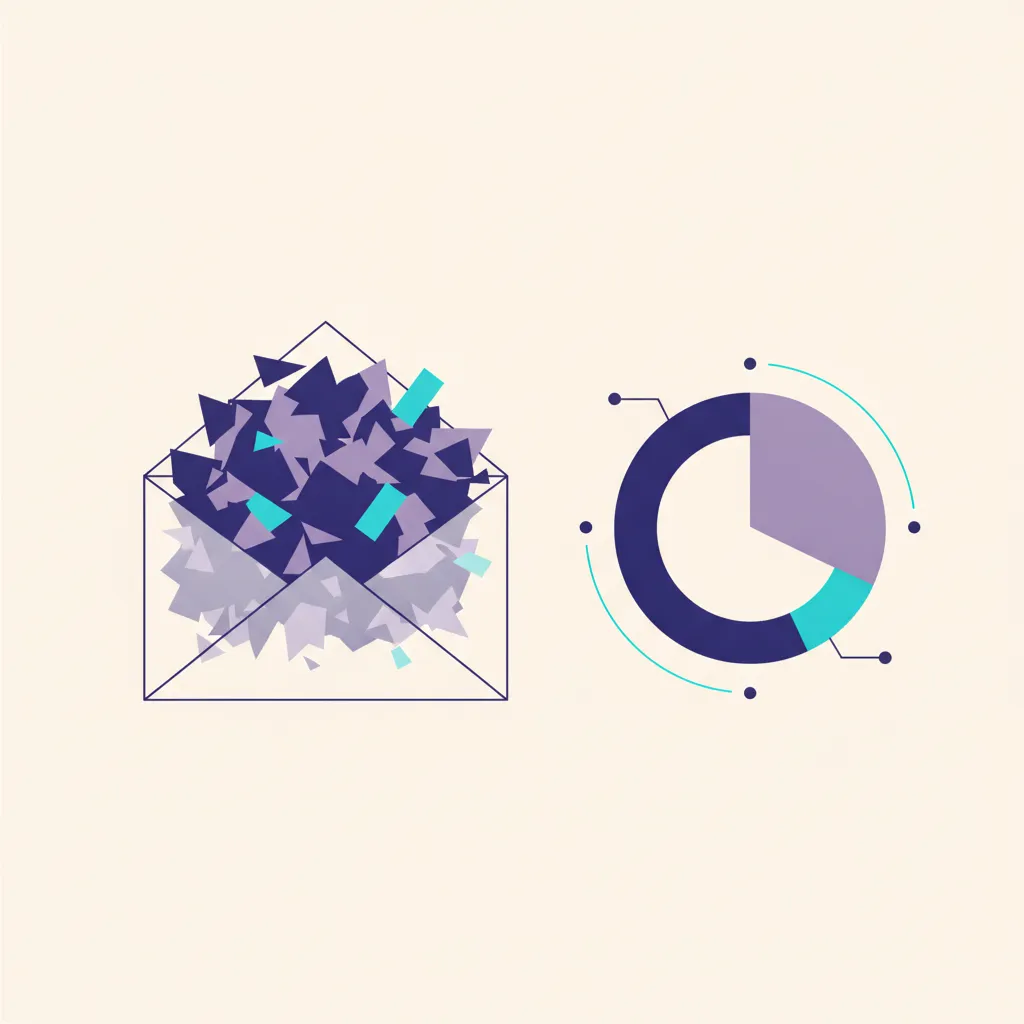
If your primary inbox feels like a digital landfill, you're not hallucinating. Half the mail bouncing around the internet right now is total trash. Day in, day out, Google and Microsoft quietly intercept billions of garbage messages at the border—and that aggressive filter defense dictates how you have to run cold outbound.
When internet service providers (ISPs) assume half of all inbound mail is spam, nobody gets the benefit of the doubt anymore.
Here is where global spam numbers stand right now, why filters are tightening the screws, and how real senders can actually land in the primary inbox.
The Raw Numbers: How Much Email Is Spam?
Security firms tracking global traffic pinpoint current spam at roughly 45% to 50% of all daily email.
According to Statista's global spam volume statistics, that ratio actually looks good compared to the late 2000s, when rogue botnets ran wild and malicious mail regularly hit 80% to 90% of global traffic.
Global Email Breakdown (Approximate)
┌─────────────────────────┬─────────────────────────┐
│     Legitimate Email    │        Spam Mail        │
│          ~52%           │          ~48%           │
└─────────────────────────┘└─────────────────────────┘
Why did the percentage shrink? Spammers didn't suddenly find religion. Tech giants simply got better at ripping down botnets, deploying edge filtering, and pushing strict authentication protocols across the web.
Yet because total email volume goes up every year, the absolute number remains staggering: over 150 billion spam messages cross the internet every 24 hours.
Why Spam Filters Are More Aggressive Than Ever
Google, Microsoft, and Yahoo deal with an exhausting dilemma: stop an ocean of junk without accidentally binning a single password reset or client invoice.
To manage it, major mailbox providers clamped down hard. In early 2024, technical setup went from "nice to have" to strict mandate. Under Google's Email Sender Guidelines, bulk senders must lock down SPF, DKIM, and DMARC, maintain near-zero complaint rates, and include one-click unsubscribe headers.
Modern filter engines rely on aggressive machine learning models reading live signals across the wire:
- Authentication integrity: Does the sending server actually have permission to talk for that domain?
- Domain age and sudden spikes: Registering a domain on Monday and throwing 800 pitches on Tuesday gets you blacklisted instantly.
- User engagement: Opens and replies build your rep; instant deletions destroy it.
- Spam complaints: A complaint rate over 0.1%—literally 1 report out of 1,000 sent—can sink your sending domain.
For sales teams, these rules mean standard cold emails catch collateral damage if your technical setup isn't bulletproof.
Is Cold Email Considered Spam?
Legally? No. Operationally? If you do it wrong, absolutely.
- Spam is contextless, mass-automated noise dumped on scraped lists. It relies on fake names, sneaky subject lines, and zero opt-out paths.
- Legitimate Cold Outreach is targeted B2B messaging sent to specific professionals with a genuine reason to care. It stays fully compliant with privacy laws (like CAN-SPAM and GDPR), offers clear opt-outs, and adds actual value.
Here's the catch: spam filters check behavioral patterns, not your moral compass. Blast 500 identical emails at once off a fresh domain and the algorithm treats you like a malware botnet—no matter how helpful your product is.
To survive, you have to separate cold outbound from your primary corporate infrastructure.
Building Resilient Email Infrastructure for Outreach
When every second email on Earth is junk, basic Google Workspace accounts and single-domain setups break quickly. Scaling cold outreach requires real control over your underlying stack.
Three core architecture choices keep senders alive:
- Multi-Inbox Sending: Scale horizontally instead of burning out one domain. Spreading 300 daily emails across 10 distinct accounts (30 per inbox) looks like standard human behavior to ISPs.
- Automated Inbox Warmup: Build domain trust on auto-pilot using real peer-to-peer sending networks before launching cold campaigns.
- Strict Policy Enforcement: Enforce automated safety brakes on bounce rates, sending speed, and domain health to cut campaigns before reputation damage occurs.
If you're sick of getting taxed per user seat every time you scale outbound, self-hosted infrastructure is the clear path forward. Tools like NexusCold deliver a white-label, self-hostable cold email engine packed with deliverability enforcement, domain warmup, and multi-inbox rotation. Moving to a self-hosted setup hands you total control over your domain reputation while killing recurring software bloat.
Best Practices to Keep Your Emails Out of the Spam Folder
Staying in the primary inbox isn't luck—it's hygiene. Follow this operational checklist to protect your infrastructure:
- Authenticate every domain: Get SPF, DKIM, and DMARC properly configured and aligned before sending a single email.
- Cap your daily volume: Keep send rates believable—cap accounts at 30 to 50 emails per day per inbox.
- Warm up new accounts: Run automated warmup cycles for 3 to 4 weeks on fresh domains before launching sales copy.
- Scrub your lead data: Run every list through an email verifier to wipe out dead mailboxes, spam traps, and catch-alls.
- Unify inbox management: Juggling dozens of logins means missed leads and slow replies. Platforms like NexusCold aggregate all incoming responses into one master inbox, driving fast response times—which ISPs read as a major positive signal.
- Write like a real person: Drop the sales gimmicks, heavy HTML templates, open-tracking pixels, and link shorteners. Keep it short, plain text, and relevant.
Modern Inbox Navigating
Spam isn't slowing down, which means mailbox providers will keep building taller walls, tighter filters, and harsher penalties for lazy senders.
Landing in the primary inbox today doesn't take secret tricks. It takes solid technical infrastructure, low sending velocity, and deliberate domain management.
If you want to scale outbound campaigns without blowing up your domain reputation or handing over endless SaaS subscriptions, build your own stack. Check out NexusCold to see how a self-hosted, white-label platform gives you complete control over your deliverability, domain warmup, and multi-inbox scale.