← Blog · July 29, 2026
What Affects Email Deliverability? A Complete Guide
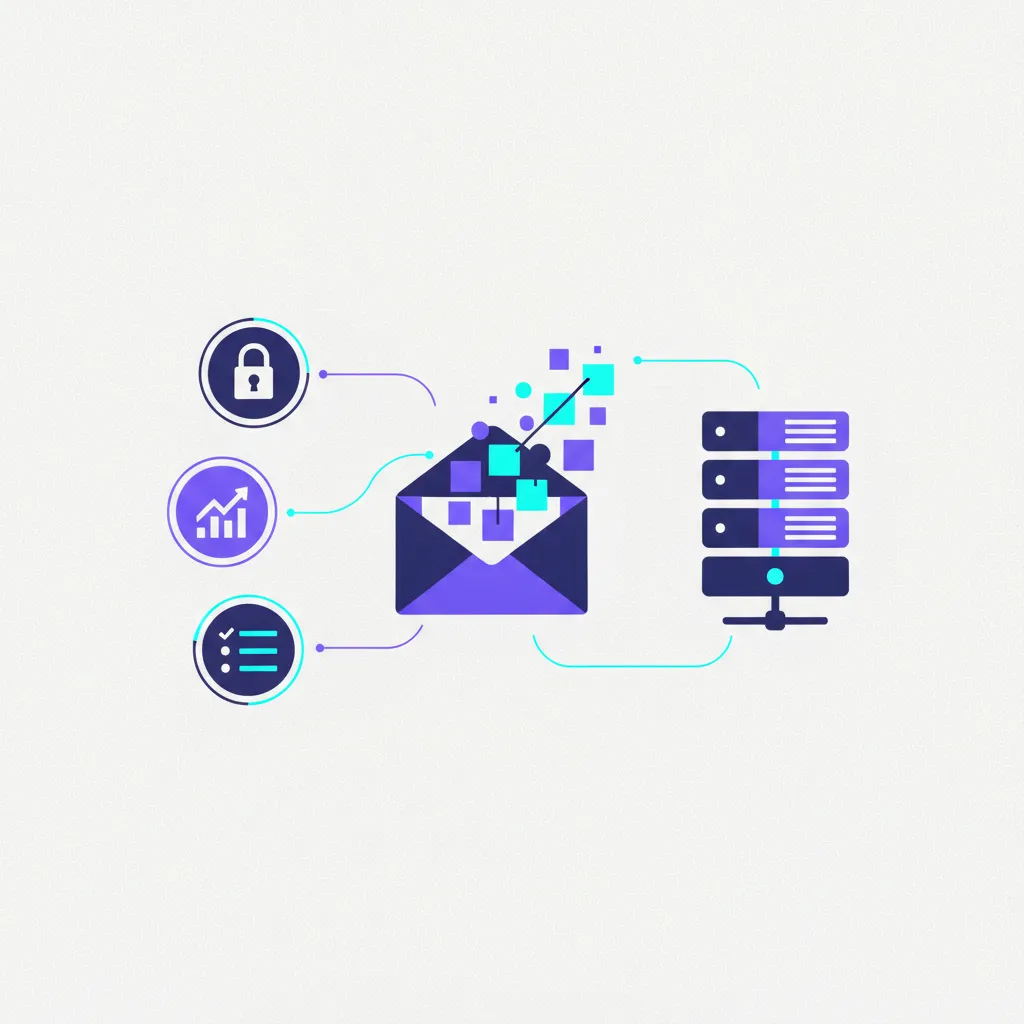
Landing in the inbox isn't luck—it's math. When your email hits spam or vanishes into a black hole, an algorithm ran a split-second risk assessment on your domain and decided you failed.
Mailbox providers like Google, Microsoft, and Yahoo process billions of messages every day. Their security filters have one job: keep junk out of the inbox. If you send cold outreach or run growth campaigns, you have to play by the exact technical rules these algorithms use to judge you.
Here is how the core deliverability factors actually work, and how to dial each one in.
Technical Authentication: Setting Up Your Domain ID
Before a mail server even scans your subject line, it checks your domain's credentials. Send without proper authentication, and receiving servers instantly assume you're an impostor trying to spoof someone else.
To clear the front door, you need four core DNS records set up correctly:
- SPF (Sender Policy Framework): A public roster listing every server and IP address authorized to send mail from your domain.
- DKIM (DomainKeys Identified Mail): A cryptographic signature baked into outgoing mail that proves your message wasn't tampered with along the way.
- DMARC (Domain-based Message Authentication, Reporting, and Conformance): Rules telling receiving servers what to do if SPF or DKIM checks fail (monitor, quarantine, or reject).
- Custom Tracking Domain (CTD): Your own sub-domain dedicated to open and click tracking. Relying on default shared tracking links in basic outreach tools puts your reputation in the hands of strangers—one bad actor on that shared link drags your inbox rates down with them.
Aligning these records proves you own the sending domain. Skip them, and mailbox providers will flag your emails on sight.
Sender Reputation and Domain Health
Think of sender reputation as a credit score attached to your domain and IP. Mail providers log everything you do, maintaining a rolling score based on your sending habits.
Key Factors Influencing Domain Reputation
- Spam Complaint Rates: The quickest way to ruin your domain. Cross a 0.1% complaint rate (literally 1 report out of 1,000 sent emails), and your primary inbox placement will collapse.
- Hard and Soft Bounces: Mailing dead, mistyped, or invalid addresses tells algorithms you bought a dirty list. Keep your hard bounce rate strictly under 2%.
- Spam Traps: Decoy addresses maintained by security vendors and ISPs to catch web scrapers. Hit just one active trap, and your domain can end up blacklisted overnight.
- Inbox Warmup: Fresh domains carry zero trust. Blasting hundreds of emails on day one guarantees a fast ticket to the spam folder. You need to ramp volume gradually over several weeks while generating real engagement—opens, replies, and "mark as not spam" actions.
Managing this manually is a massive time sink, which is why smart teams build automation around it. Tools like NexusCold bake automated inbox warmup right into the platform, simulating organic peer interactions to establish bulletproof domain health before you launch live outbound.
Sending Infrastructure and Volume Dynamics
How you send messages matters just as much as what you say. Sudden spikes in volume scream "spammer" to security filters, making steady, controlled sending non-negotiable.
High Volume + Single Account = High Spam Risk
Low Volume + Multiple Accounts (Distributed) = High Deliverability
The Power of Multi-Inbox Sending
Pushing 500 cold emails a day out of a single address is deliverability suicide. Modern outreach relies on multi-inbox rotation: spreading those 500 emails across 10 to 15 separate accounts (roughly 25–35 sends per inbox per day).
Shared SaaS Infrastructure vs. Self-Hosting
Standard SaaS platforms route outgoing mail through shared IP pools and pooled servers. If another sender on that shared setup starts spamming, your domain takes collateral damage.
Self-hosting your outbound stack fixes this by giving you direct control over your servers, IP allocation, and domain routing. Platforms like NexusCold let you deploy a self-hosted, white-label cold email engine. You isolate your sending reputation from third-party bad actors, eliminate per-seat SaaS markups, and lock in strict, account-level daily limits across unlimited inboxes.
Email Content and Engagement Signals
Once your technical foundation passes inspection, spam filters inspect your actual message body and monitor how real recipients interact with it.
Content Red Flags to Avoid
- Spam Trigger Words: Heavy-handed sales pitches featuring phrases like "100% free," "risk-free," "make money fast," or aggressive dollar signs trigger automated flags instantly.
- Heavy HTML and Media: Fancy templates loaded with giant images, complex CSS, or messy code look suspicious to security scanners. Plain text or lightweight HTML routinely wins the primary inbox.
- Excessive Links: Stick to one clean URL—or zero links on initial cold outreach. Every extra link increases your threat score.
- Vague Subject Lines: Clickbait subject lines cause quick deletes and spike your spam complaint rate.
Positive Engagement Signals
Algorithms favor senders who generate real conversations. When recipients open your email, hit reply, forward it, or pull it out of the spam folder into their primary inbox, your domain score climbs. Quick deletes without opening signal the opposite.
Built-In Rules: The Key to Long-Term Protection
Keeping deliverability high requires non-stop maintenance. Watching bounce logs, enforcing hard daily caps across dozens of secondary domains, and pausing burned accounts by hand eats up hours of tedious work every week.
The fix isn't grinding harder; it's programmatic safety guards. High-performing outbound teams run platforms with automated rules that pause sending accounts the second bounce rates hit 2%, introduce randomized delay intervals between sends, and manage incoming replies across secondary domains from a unified inbox.
Where legacy tools like Instantly or Smartlead charge escalating monthly fees per seat or active lead, an isolated setup like NexusCold handles multi-inbox rotation and native warmup out of the box. It enforces safe sending habits by default—protecting your domain health while keeping operational costs flat.
Mastering Deliverability for Scalable Outreach
Deliverability isn't something you set and forget; it's active risk management. By locking down your authentication stack (SPF, DKIM, DMARC, CTD), keeping per-account daily volume low, relentlessly cleaning lists, and monitoring engagement signals, you secure direct access to your prospect's inbox.
If you need a reliable, cost-controlled way to scale cold outreach without burning through domains, check out NexusCold. With automated deliverability rules, white-label control, and multi-inbox management, it gives you full ownership over your outbound pipeline.